
A Magic Carpet Ride Back: Revisiting PUBG Mobile's Enchanting Arabian Nights Update
The PUBG Mobile 3.1 update introduced the magical Arabian Nights theme, featuring the armor-piercing P90 and whimsical Genie Grenade.
The winter of 2024 remains etched in my memory like a vibrant tapestry, and I still catch myself humming tunes from that season whenever a dusty Erangel sunset tints the sky. PUBG Mobile's 3.1 update, launched in early February of that year, wasn't just a patch — it was a sixth-anniversary gift wrapped in the silk of One Thousand and One Nights. Even now, in 2026, the echoes of that sand-swept whimsy feel as fresh as the moment I first parachuted into the transformed spawn island. It was a period when the battlegrounds shed their usual militaristic skin and slipped into something far more magical, an oasis shimmering amid the desert of battle royale seriousness.
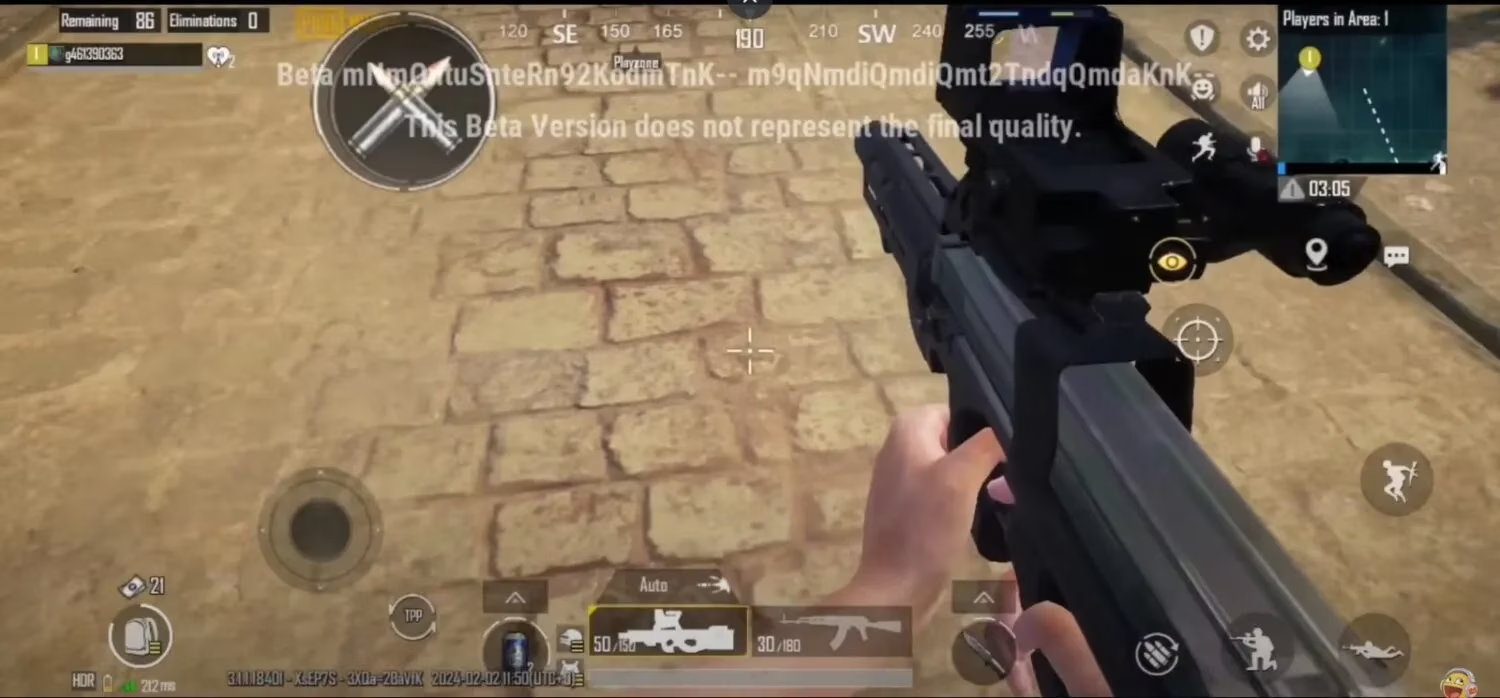
At the heart of this update was the P90, a weapon that felt less like a firearm and more like a key to the future. I remember the collective gasp when it first fell from an airdrop, its compact silhouette humming with the promise of 5.7mm armor-piercing rounds. It had no need for attachments; the built-in scope was its lone eye, unblinking and precise, making the gun feel as self-contained as a sealed scroll. Using it was a lesson in scarcity — you couldn't just scavenge more ammo from a random crate. Each magazine was a rare word in a forbidden incantation, forcing me to weigh every trigger pull against the silence of an empty chamber. This scarcity turned every encounter into a high-stakes gamble, where the P90 was the ultimate winning card.
The Arabian Nights theme mode draped the entire Erangel map in a nocturnal cloak, as if the sky itself had swallowed the sun for a grand storytelling session. The spawn island became a prelude of minarets and arches, bathed in golden light that made every pre-match wait feel like the hush before a tale began. But the true metamorphosis occurred in the night mode, which descended upon the map like a velvet blanket, so thick you could almost feel its weight. Shadows became allies and traitors in equal measure; a bush that seemed harmless by day could suddenly conceal a whole squad. I learned to move by sound and silhouette, my heartbeat a drumming narrative against the quiet. The environment wasn't just a backdrop — it was a character, its dimly lit courtyards and crescent-moon lanterns guiding my steps through a labyrinth of suspense.
Two new utilities bent the rules of physics and logic. The Genie Grenade was a burst of pure, smoke-swirled theater. Tossing it didn't just create a protective shield; it summoned a spectral genie that compelled anyone inside to dance. I will never forget the sight of an entire squad, moments from eliminating me, suddenly jerking and swaying like marionettes controlled by a drunken puppeteer. Their frantic shuffling transformed a lethal standoff into a surreal ballet of survival. Then there was Aladdin’s Portal, a pair of shimmering doorways that felt like the magical equivalent of a backstage pass. Popping one down behind a sniper’s nest and another on an adjacent rooftop let me vanish and reappear like a rumor. I used it once to escort a knocked teammate out of a blue zone, the two of us spilling through the portal as if we’d stepped through a fold in reality itself, leaving certain death behind.
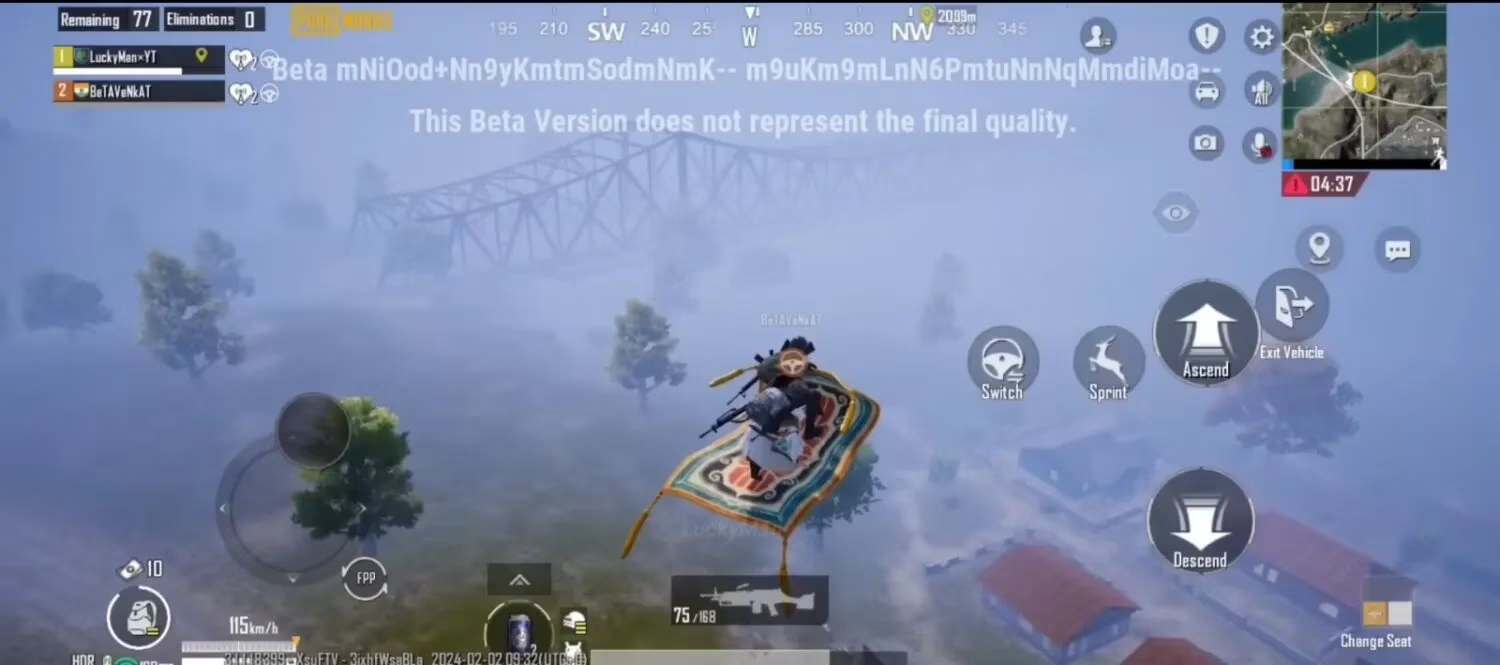
Perhaps the most majestic addition was the Magic Fly Carpet, a two-seater that looked woven from phoenix feathers and moonbeams. On the ground, it skated smoothly, a silent shadow that could slip between buildings undetected. But the real thrill came when it lifted into the air. As a driver, I felt like a falconer steering a bird made of silk and cedar, helpless to fire yet invincible in elevation. My passenger, however, became a harpy of the heavens, unleashing a stream of bullets upon enemies who never thought to scan the clouds. We once used it to storm a final circle that had shrunken to an open field, the carpet descending like a judgment from the stars while I dodged panicked shots. It wasn't just a vehicle; it was a statement, a way to stitch your own path across the sky and rewrite the geometry of the battleground.
Beyond the combat, the update planted seeds of permanence with the Homeland feature, a digital hearth where I could finally build a sanctuary amidst the chaos. I spent hours arranging carpets and lanterns in a tiny room that was mine alone, a pocket of peace where friends could visit and leave traces like footprints in sand. Complementing this were the hidden treasure maps that led to buried loot, and the spring-loaded trampolines at hot drops that turned frantic scrambles into acrobatic shows. These details sanded away the raw edges of competition, weaving community and curiosity into the very fabric of the game.
Looking back from 2026, the 3.1 update remains a masterclass in thematic immersion. It was a moment when PUBG Mobile stopped being just a shooter and became a storybook, one where I could dance with genies, fly on enchanted rugs, and carve a home from the rubble of war. The Arabian Nights magic didn’t just celebrate an anniversary; it rekindled a childlike wonder that often gets lost in the grind of ranks and ratios. Even today, when I see a night mode toggle in newer updates, I think of that velvet blanket and smile — because for a few brilliant patches, we all walked in Scheherazade’s sandals, spinning our own survival tales beneath a pixelated moon.