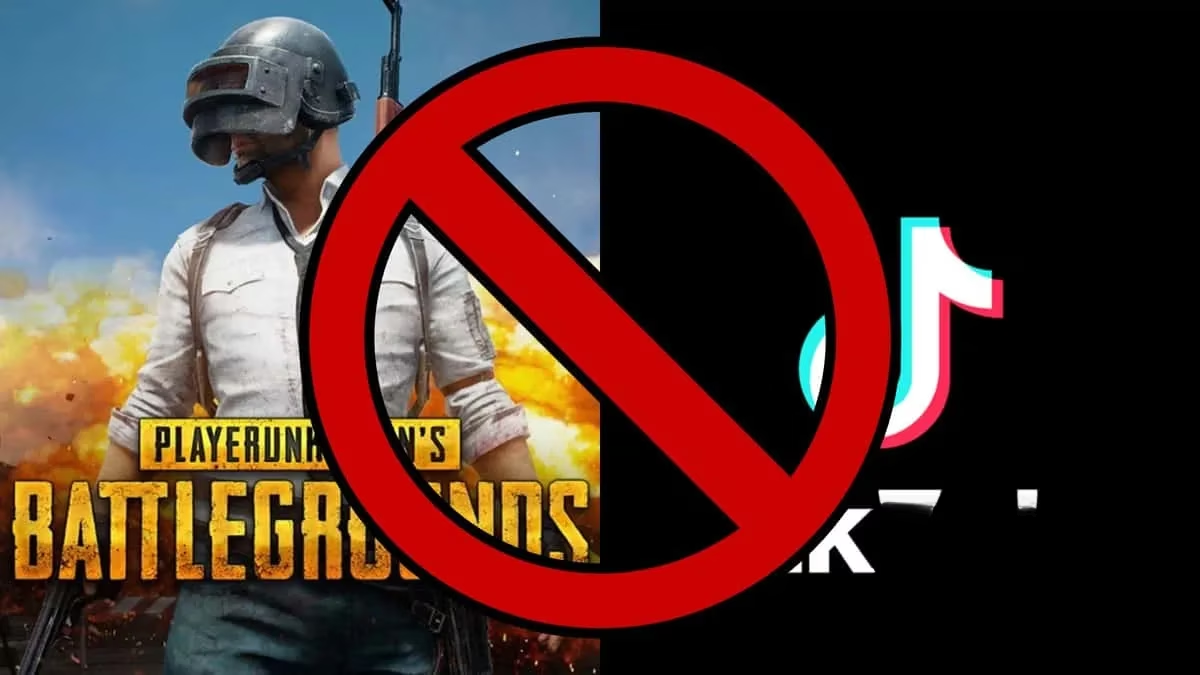
Four Years Without PUBG and TikTok: An Afghan Gamer's Reality in 2026
The abrupt ban on TikTok and PUBG Mobile in Afghanistan stripped away digital connection and gaming culture, leaving a void for millions.
I still remember the exact sound of the plane passing over Erangel, that low rumble followed by the leap into chaos. Back in early 2022, I was a regular PUBG Mobile player, spending hours with my squad every evening. We had our own tactics, our favorite drop spots, and that shared adrenaline when the blue zone closed in. TikTok was my unwind tool – scrolling through endless battle royale clips, dancing trends, and funny skits that made the Afghan internet feel connected to a bigger world. But everything changed when the Taliban\u2019s Ministry of Telecommunication dropped the bombshell: TikTok would be banned within a month, and PUBG would follow in 90 days. That was four years ago, and I\u2019m still struggling to fill the void.
The Day the Servers Went Silent
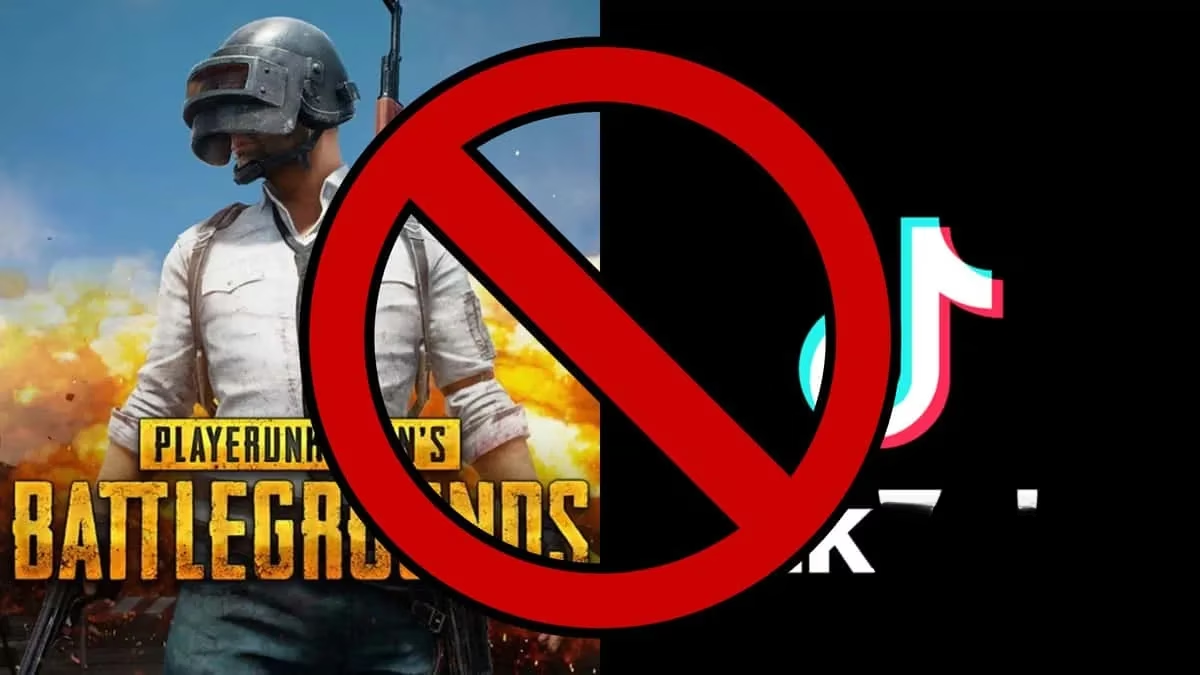
The announcement came in late April 2022, and I remember my disbelief. I thought it was just another rumor. Taliban officials said both platforms were \u201cmisleading the younger generation,\u201d and they had been voicing concerns for a long time. When the Khaama Press reported the exact deadlines \u2013 one month for TikTok, three months for PUBG \u2013 it felt personal. I wasn\u2019t alone; Afghanistan had seen a massive surge in internet users, and both apps were daily staples. Over 1 billion people worldwide were active on TikTok, and PUBG was one of the best-selling games ever. Yet suddenly, we were about to join Pakistan and India as countries that officially banned the battle royale phenomenon.
I played my last match on a sticky July evening. My squadmates and I gathered for a farewell dinner in the game, landing in Pochinki one final time. The ban was implemented exactly as threatened. Without any VPN workaround, the servers became unreachable. TikTok\u2019s endless feed slowed to a static message. The digital streets I used to wander through fell completely silent.
Adapting to a New, Quiet Rhythm
The first few months were bizarre. My phone, which once buzzed with match invites and video notifications, became a hollow device. I tried filling the gap with other games \u2013 Free Fire, Call of Duty Mobile, even old-school chess apps. But nothing replicated the tactical depth and squad camaraderie of PUBG. My teammates scattered; some quit gaming altogether, while others secretly used unstable VPNs to access Indian or European servers. The latency was horrible, and the risk of being caught made it not worth it for most of us.
Without TikTok, the cultural disconnect felt deeper. Afghan youth had used the platform to showcase cooking recipes, traditional attire, and humorous slices of daily life. I missed watching creators from Herat and Kabul share their talent. Now, the only short-form content comes from heavily censored local apps or expensive satellite TV. A creative outlet vanished, and with it, a piece of our youthful expression.
How the Ban Shaped a Generation
Over the last four years, I\u2019ve watched my younger cousins grow up without ever knowing what a PUBG lobby sounds like. They don\u2019t understand why I mimic the \u201cWinner Winner Chicken Dinner\u201d phrase. It\u2019s a strange generational split. Internet cafes have rebranded into digital literacy centers, but they feel empty. The number of VPN downloads skyrocketed initially, but the Taliban tightened controls, making circumvention harder and penalties stiffer. Many simply gave up.
From a player\u2019s perspective, the ban did more than remove entertainment. It erased a community. We used to have local tournaments, informal leaderboards, and even charity streams. All of that collapsed. In 2026, I still hear occasional whispers about a private server running somewhere in the city, but it\u2019s more legend than reality.
Reflections from a Casual Gamer
Looking back, I understand the authorities wanted to prevent what they saw as \u201cmisleading\u201d content. But as a regular player, I never felt misled \u2013 I felt connected. PUBG taught me quick decision-making and teamwork. TikTok let me laugh at shared human moments. Losing both felt like losing a part of my identity. Now, my evenings are quieter. I read more, but I miss the chaos of a hot drop and the thrill of a final circle.
The ban did push some people toward physical sports and face-to-face interaction, which isn\u2019t entirely bad. Yet it\u2019s impossible to ignore the digital gap that widened between Afghanistan and the rest of the world. While my peers abroad hop from one trending app to another, we remain stuck in a time capsule, reminiscing about battle passes and viral sounds.
A Gamer\u2019s Small Hope
Despite everything, I keep a glimmer of hope. Technology evolves, and policies sometimes soften. I still have my old PUBG screenshots, saved on a dusty hard drive. Every now and then, I scroll through them, remembering the sights and strategies. Maybe one day the servers will light up again, or a new platform will emerge that satisfies both cultural concerns and our need for recreation. Until then, I\u2019ll be here, a veteran of Erangel, waiting in the lobby \u2013 disconnected, but not forgotten.