
I Studied PUBG's Permanent Ban List And Here Is What I Learned
The PUBG permanent ban list targets illegal software users, permanently deleting accounts and inventories from the 2024/11/11–11/17 wave.
I’ve been playing PUBG: BATTLEGROUNDS long enough to know that the anti-cheat team’s weekly ban list is not just a spreadsheet—it is a warning shot. I’m not gonna sugarcoat it: illegal software may promise fast wins, but it usually delivers a permanent ban and a very empty inventory. The latest bulletin I have been examining covers an investigation period from 2024/11/11 to 2024/11/17, and the number of permanently banned accounts is another reminder that cheating is a losing strategy.
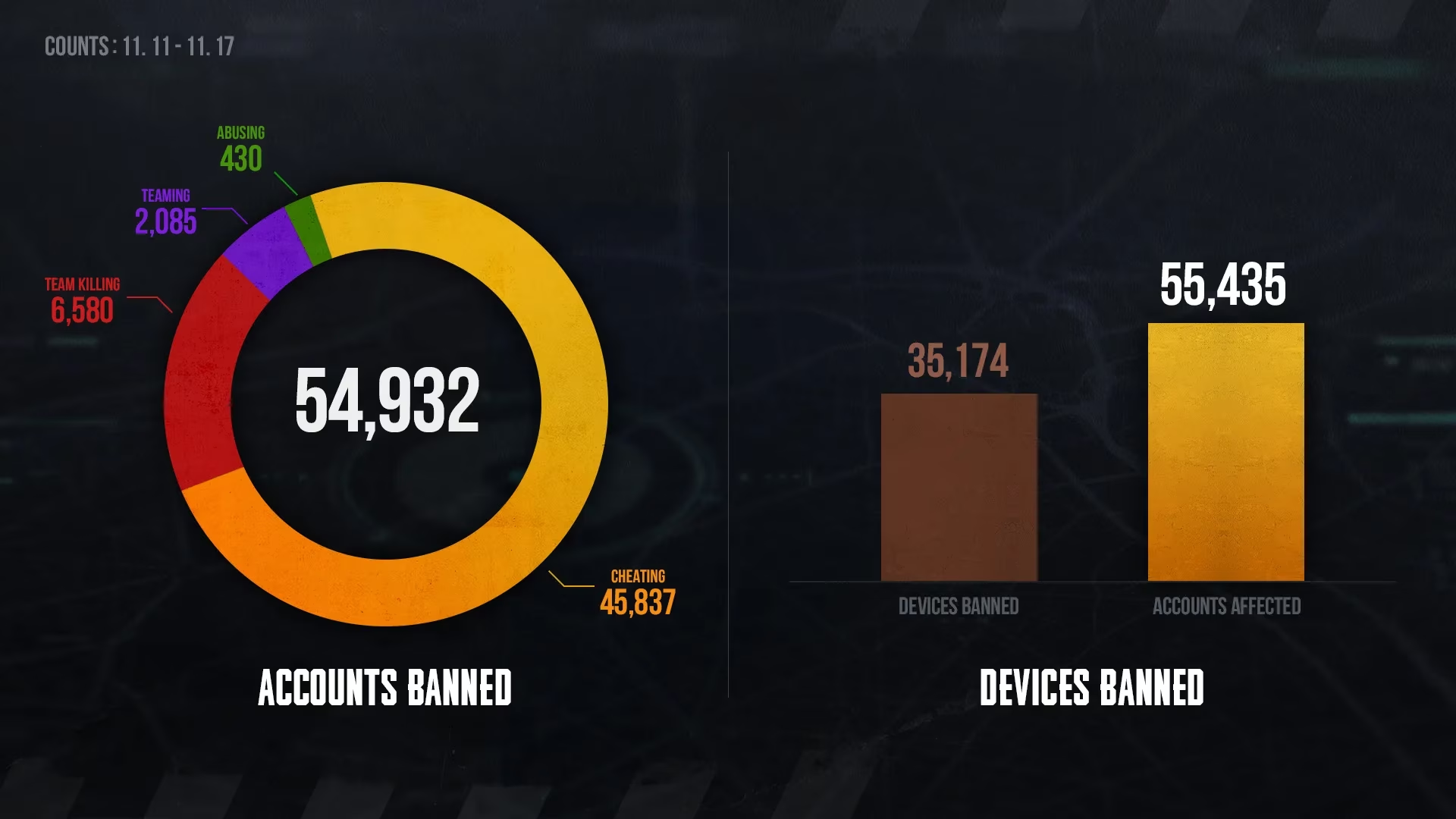
The list attached to the official announcement is deliberately stripped back. It shows the in-game nicknames of permanently banned accounts, but the first three letters of each nickname have been replaced with *. I actually like that approach. It keeps a public record of enforcement without turning every name into an open call for harassment. At the same time, let’s be real: if you are on that list, your PUBG career took a very permanent turn.
What the ban wave tells me
The investigation window is short, but the penalty is not. Permanent means no second chance, no appeal magic, and no quiet return after a few weeks. These accounts are gone from the ranked grind, the event rewards, and the skins they may have spent real money on. For me, that is the strongest part of the announcement. Temporary bans can feel like a slap on the wrist, but permanent bans send a clear message: the ban hammer does not sleep.
Here are the core facts from the bulletin:
-
Investigation Period: 2024/11/11 – 2024/11/17
-
Penalty: Permanent ban
-
Published information: In-game nickname with the first three characters masked
-
Full list: Available in the official announcement for permanent bans
I have watched the anti-cheat team publish these lists many times, and the format is consistent. That consistency matters because it shows players that enforcement is not a one-off event. It is a routine, weekly rhythm. The personification of illegal software in the community—call it the cheater’s hustle—is exactly what these lists are designed to disrupt.
How I report illegal software and misconduct
The bulletin is also a reminder that the community plays a role in cleaning up the lobbies. I always report suspicious behavior through the in-game report system first. That system sends the raw match data and player reports directly to the anti-cheat process, which gives the team useful evidence. If I need extra assistance after that, I can contact PUBG Support with more context.
I follow a simple reporting routine:
-
Use the in-game report tool immediately after a suspicious fight.
-
Save a short clip of the moment if I can.
-
Include the time, server, and player name when contacting support.
-
Avoid public call-outs; they do not help an official investigation.
This routine is not complicated, but it works. The anti-cheat team has said repeatedly that player reports feed their detection pipeline, and I have seen enough ban waves to believe that.
Why I protect my account with Steam Guard Mobile Authenticator
One part of the bulletin might surprise newer players: the anti-cheat team specifically asks everyone to sign up for Steam Guard Mobile Authenticator. I get why. If your account is stolen, it can be used for illegal software or other misconduct, and then you are the one left holding a permanent ban. That is a nightmare scenario I would not wish on anyone.
Setting up Steam Guard Mobile Authenticator is straightforward:
| Step | Action |
|---|---|
| 1 | Open the Steam app on your phone |
| 2 | Go to Steam Guard settings |
| 3 | Add authenticator to your device |
| 4 | Confirm your phone number when prompted |
Once it is active, you have an extra layer of protection before anyone can log in or change your account details. For a game like PUBG, where accounts can hold years of cosmetics, stats, and battle pass progress, that protection is non-negotiable.
Why I still pay attention to these lists in 2026
Some players may look at a weekly ban list and think it is a drop in the ocean. I see it differently. Every permanent ban removes a cheater from someone’s matchmaking pool. Every public report shows that illegal software has a cost. The anti-cheat team also says it values player interest and opinions, which is not empty PR if the community keeps supplying accurate reports.
My final take is simple: PUBG’s anti-cheat effort is not perfect—no online game’s system is—but it is visible, repeated, and aggressive where it counts. If you want to keep your account, secure it. If you see something suspicious, report it. And if you are tempted by illegal software, remember that the weekly list is waiting for a new name.
That is the part of the update I appreciate most. It does not just say we ban cheaters. It shows the names, it explains the rules, and it gives honest players a way to help. That is fair gaming in action. 🎯