
PUBG's Weekly Ban Wave: I Read the List So You Don't Have To
PUBG's weekly banned players list (Aug 10–16, 2026) exposes permanent anti-cheat bans, masked nicknames, and in-game reporting.
The ban hammer never sleeps, and this week it came down hard. On August 19, 2026, the PUBG: BATTLEGROUNDS Anti-Cheat Team published its weekly roster of permanently banned accounts, covering an investigation period that ran from August 10 through August 16, 2026. I went through the announcement, and honestly, it reads like a receipt for a very expensive lesson — hundreds of nicknames, each one with its first three letters quietly replaced by asterisks, each one a closed door.
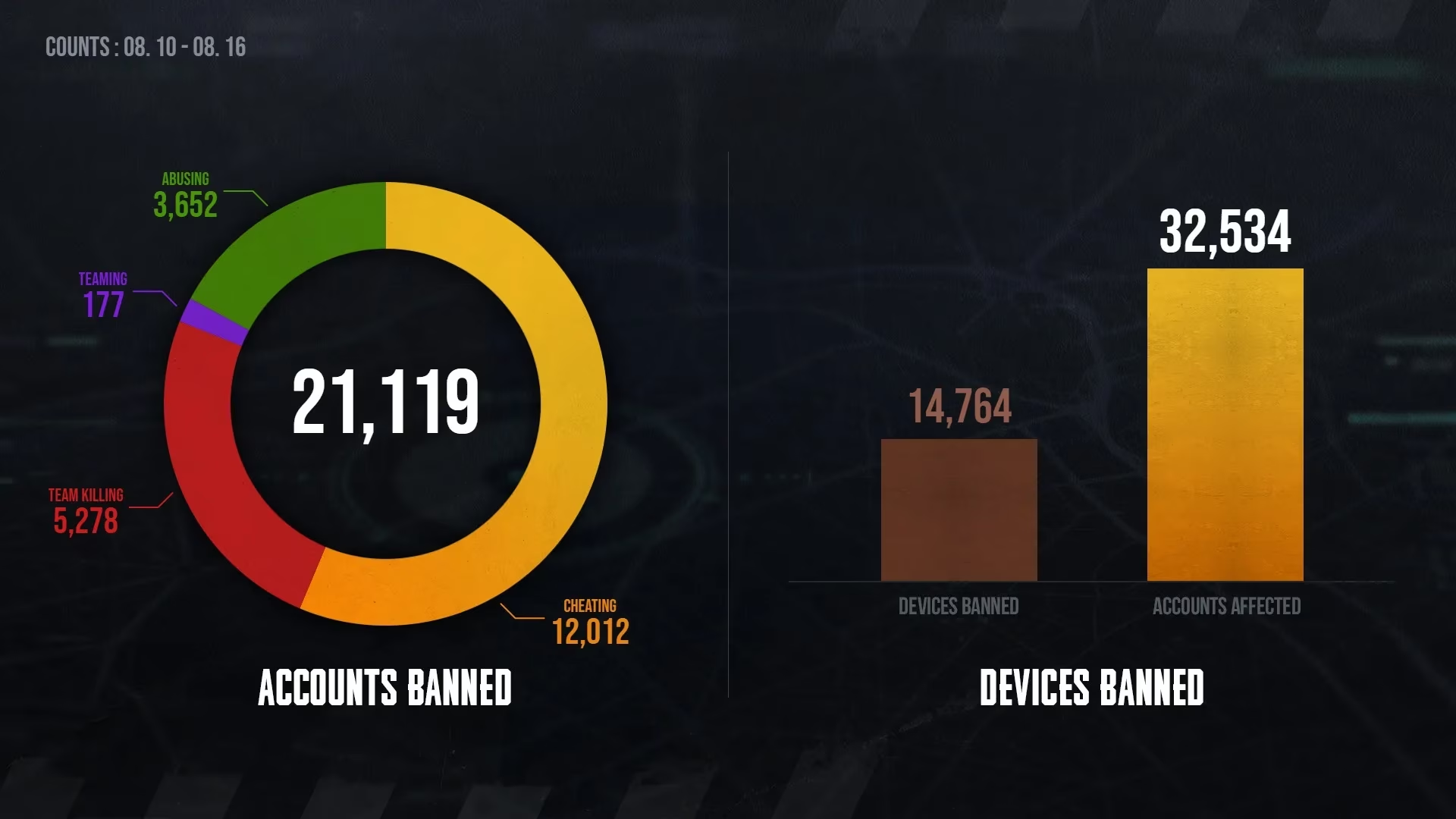
What the notice actually says
The team's message is short, but it carries weight. The list exists, in their words, to "raise awareness about the abuse of illegal software and the consequences of misconduct." That's corporate language for something pretty blunt: cheating gets you erased, and everyone gets to see the eraser marks.
A few details matter here:
-
Investigation window: 2026/08/10 to 2026/08/16 — a tight, seven-day sweep.
-
Scope: permanently banned accounts, not temporary suspensions.
-
Privacy handling: every nickname on the public list has its first three characters replaced with "*", so the list names the offense without turning into a witch hunt.
-
Reporting channel: in-game reports come first; PUBG Support is the fallback if you need extra help.
-
Account safety: the team explicitly urges players to enable Steam Guard Mobile Authenticator.
That last point deserves a spotlight. A lot of bans aren't master criminals at work — they're accounts that got hijacked because someone reused a password or skipped two-factor authentication. Here's the thing: your inventory is only as safe as your login. Steam Guard Mobile Authenticator takes a couple of minutes to set up, and it's the difference between owning your skins and reading about them in someone else's trade history.
Why the asterisks matter
I've seen ban lists before, and they usually feel like a wall of noise. This one is different in a quiet way. By masking the first three letters, the anti-cheat team protects the players behind the names while still publishing the count. It's a strange kind of courtesy — the list is public, the shame is public, but the identity stays just out of reach.
And let's be honest, that's the right call. The goal isn't to ruin anyone's life; it's to make the lobby feel like a lobby again instead of a magic show where half the squad can see through walls.
| What gets you banned | What happens next |
|---|---|
| Using illegal software | Permanent account ban |
| Misconduct in-game | Permanent account ban |
| Compromised account abuse | Ban + support ticket required |
The reporting pipeline is the real weapon
The notice repeats something that's easy to skip past: report cheaters in-game first. That's not bureaucracy for its own sake. In-game reports carry match data, timestamps, and context that a forum post or an email never will. When I file a report, I'm not just venting — I'm feeding a system that clearly does something with the input, because a fresh list lands every single week.
If you want to go the extra mile, the team also points players toward PUBG Support for cases that need more than a click. And if you're the type who screenshots everything, good — that habit pays off.
A fair lobby is a shared project
The closing lines of the announcement stick with me. The anti-cheat team says it "highly values your interest and opinions" and promises to "do our best to provide a fair gaming environment." That's a two-way street, and the traffic has to flow both directions. They build the walls; we report the cracks.
So here's my takeaway for the week: check your Steam Guard, report what you see, and don't be the asterisk. The list comes out again next week, and I'd rather read about someone else's bad decisions than live through my own. 🎯
See you in the lobby — fair fight, no walls.