
PUBG Update 37.1 Map Rotation: Ranked Says Goodbye to Vikendi and Deston
PUBG Update 37.1 map rotation uses regional map preference metrics—playtime, match count, select, and leave rates—giving bigger maps 2x queue odds.
When the developers dropped the Update 37.1 map preference notes, it became clear that map rotation is not just about good vibes or couch opinions. The team explained that map preference is measured through a comprehensive analysis of various factors related to map usage across all modes, including playtime, match count, select rate, and leave rate. In simpler terms, if a player noped out of a map the moment the plane loaded, that rage quit was quietly added to a spreadsheet somewhere. Even the quitters had a voice. That is either brilliant or deeply unsettling, depending on how often a person abandons Miramar after dying in some dusty valley.
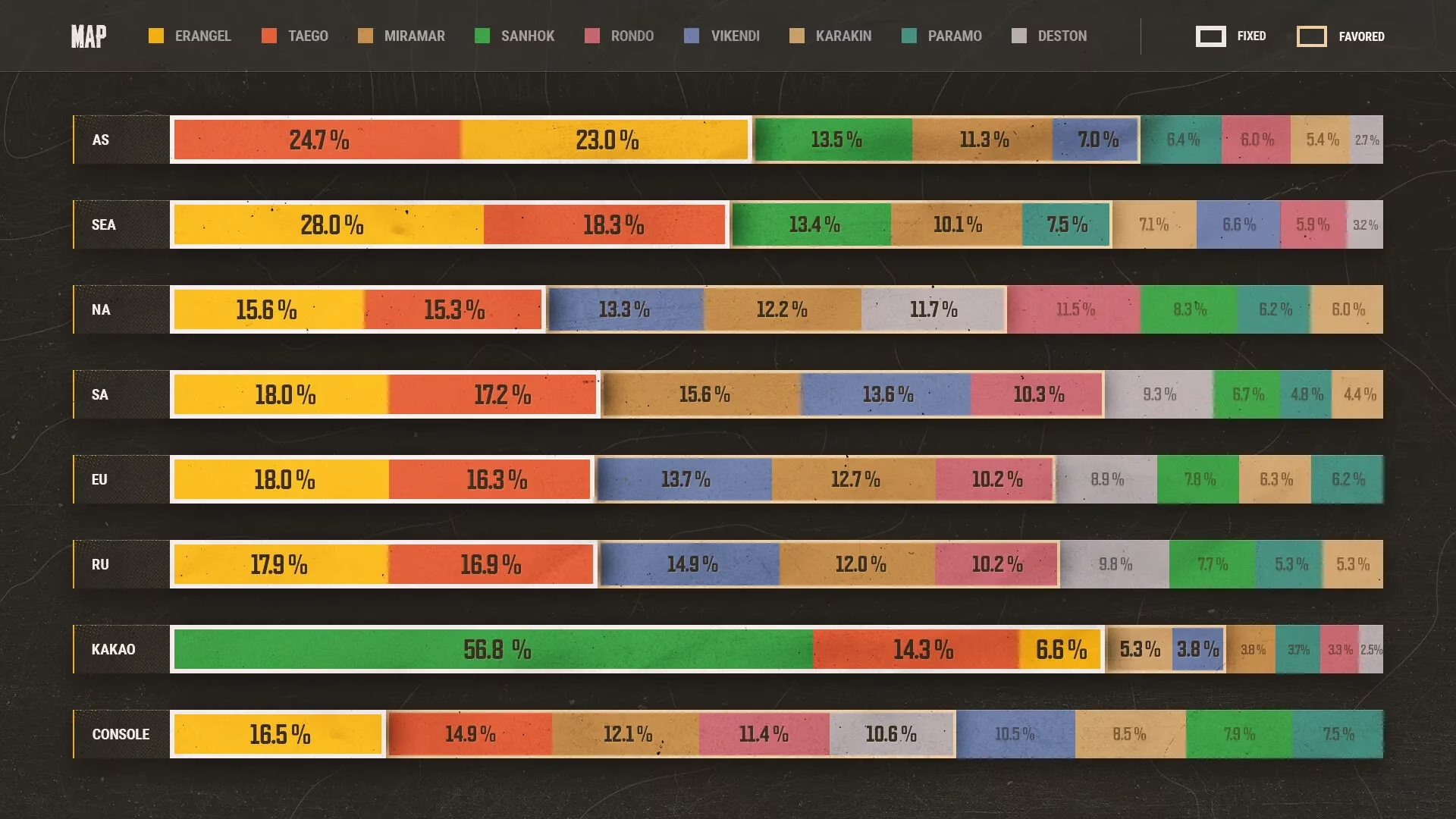
The Numbers Behind the Madness
Map preferences from the regional data laid the groundwork for the rotations applied in Update 37.1. The PUBG team also noted that due to rounding, the total of map preference percentages may not add up to exactly 100%. This is the official excuse for every player who has ever stared at a pie chart and screamed, “That is not how math works.” It is fine. Rounding happens. The real takeaway is that some maps were popular enough to stay, while others received the cold shoulder from the rotation committee.
For anyone who loves data-driven chaos, the preference factors are worth a closer look:
-
🕒 Playtime: How long players actually stuck around
-
🔢 Match count: How often a map got selected
-
🎯 Select rate: How frequently players chose a map when given a chance
-
🚪 Leave rate: How many players bolted for the lobby before the first circle even closed
That leave rate is particularly spicy. It means a map with a high abandon rate could see its standing drop, even if the remaining players genuinely loved it. Some maps are like a bad party: half the room leaves early, and the other half insists it was amazing.
What Changed in Update 37.1
The rotation details came with a few platform-specific notes that players needed to read carefully. Otherwise, the Wednesday versus Thursday split was a recipe for confusion. The key schedule looked like this:
| Platform | Rotation Update Time |
|---|---|
| PC | Every Wednesday at 02:00 UTC |
| Console | Every Thursday at 07:00 UTC |
For KAKAO platform players, the rules remained a little more fixed. Erangel, Taego, and Sanhok are always included in the Fixed Map pool. That means KAKAO players can always rely on seeing those familiar names, though whether they actually enjoy seeing them is a completely different matter. Some players treat Erangel like an old friend; others treat it like a landlord who never leaves.
There was also an important note about map size and matchmaking probability. The 8x8 km maps have roughly double the matchmaking probability of smaller maps. This means bigger maps get more love in the queue, while smaller maps have to fight for scraps. It is not personal. It is just math, or at least that is what the smaller maps tell themselves at night.
Console players also received a small dose of bad news: Deston was temporarily removed from the map rotation due to technical issues on Console platforms. The team promised an update when it was ready to return. Until then, Console players who loved Deston could only stare out the window and remember the good times. Technical issues are the ultimate party pooper.
Ranked Sweeps Out Vikendi and Deston
Perhaps the biggest headline came from the Ranked map pool. The update revealed a clean and simple ranked rotation:
| Map | Ranked Share |
|---|---|
| Erangel | 25% |
| Miramar | 25% |
| Taego | 25% |
| Rondo | 25% |
Four maps, equal shares, no funny business. But the real drama was what did not make the list. Starting with Update 37.1, Vikendi and Deston would no longer be included in the Ranked map pool. This was not a small change. For players who had spent countless hours mastering the snowy hills of Vikendi or the flooded streets of Deston, the news felt personal.
The developers provided a clear explanation. Going forward, only maps featured in official Esports tournaments will be available in Ranked. The idea is to align the Ranked experience more closely with the Esports spirit. In practice, this means players watching professional matches can jump into the same map pool and pretend they understand the rotations half as well as the pros.
The developer comment summed it up: by connecting the matches people love watching with the ones they enjoy playing, the Ranked queue should feel more competitive and more relevant. That sounds noble, but it also means anyone who enjoyed a casual snowy shootout in ranked would have to take that energy to normal mode. The Esports train does not stop for snowball fights.
The Casual Player’s Take
For a normal player, the Update 37.1 rotation notes were equal parts useful and humbling. They showed that map preference is not a mystery; it is a data-driven popularity contest with leave rates and rounding errors. They also showed that Ranked mode is becoming more serious, more Esports-flavored, and less forgiving to quirky maps that do not make the tournament cut.
In 2026, these rotation principles still shape how players think about queue times and map variety. Some will miss Vikendi and Deston in Ranked. Others will celebrate the cleaner, more competitive pool. Either way, the data will keep counting every playtime, match, selection, and rage quit. So next time a player leaves a map early, they should remember: the spreadsheet is watching.